
Introduction
Glassdoor has become one of the most important sources of workforce intelligence and labor market data on the internet. It provides access to company reviews, salary insights, interview experiences, and employee feedback that are widely used in recruitment analytics, market research, compensation benchmarking, and broader labor market intelligence systems.
For enterprises, data platforms, and recruitment-focused organizations, this type of information plays a critical role in understanding how companies operate internally and how talent markets evolve over time. It is commonly used to analyze salary distribution across regions, evaluate employer branding performance, track hiring competitiveness, and build structured datasets for HR analytics or AI-driven workforce modeling.
However, collecting data from Glassdoor at scale in 2026 is significantly more complex than it appears. The platform relies on dynamic rendering, API-driven content loading, strict rate limiting, IP reputation scoring, and advanced anti-bot detection systems that can easily block simple scraping scripts or unoptimized automation workflows.
In this article, we will explore how Glassdoor scraping works in real-world systems, what technical approaches are commonly used in production environments, and how proxy infrastructure becomes a foundational layer for building stable, scalable, and reliable data collection pipelines.
What Is Glassdoor Scraping?
Glassdoor scraping refers to the automated process of extracting publicly available data from Glassdoor pages. This data typically includes company profiles, employee reviews, salary reports, interview experiences, and employer ratings, which together form a valuable dataset for understanding organizational structure and workforce behavior.
Although this information can be viewed manually in a browser, scraping allows organizations to transform unstructured web content into structured datasets that can be processed, analyzed, and integrated into larger data systems. This enables more advanced use cases such as trend analysis, benchmarking, and large-scale aggregation across multiple companies and industries.
In practice, Glassdoor scraping is widely used in HR analytics, talent acquisition, labor market research, and competitive intelligence. It helps organizations gain a more data-driven understanding of salary distribution, employee sentiment, hiring competitiveness, and overall employer positioning within specific markets.
How Glassdoor Structures Its Data
Understanding how Glassdoor serves content is essential before building any scraping system, as the platform’s data delivery model directly determines which scraping methods are effective.
Most pages on Glassdoor are not fully static. Instead, content is dynamically generated through a combination of JavaScript rendering and backend API-driven requests. In many cases, the initial HTML response contains only minimal structure, while the actual content is populated after the page loads in the browser. As a result, a simple HTTP request often returns incomplete or empty datasets if it does not execute the required client-side logic.
In addition to dynamic rendering, Glassdoor relies heavily on internal data endpoints that are accessed through controlled frontend workflows. These endpoints are typically not designed for direct public consumption and may include authentication checks, session validation, or request context dependencies, which further complicates direct scraping approaches.
Beyond content delivery, Glassdoor also implements multiple layers of request monitoring and traffic analysis. These systems evaluate signals such as IP reputation, request frequency, session consistency, and behavioral patterns to distinguish between human users and automated traffic. When abnormal activity is detected, the platform may respond with rate limiting, CAPTCHA challenges, or temporary access restrictions, depending on the severity of the detected pattern.
Scraping Methods for Glassdoor
Basic HTML Scraping with Requests
The simplest way to start scraping Glassdoor is by sending HTTP requests and parsing the returned HTML. This approach is often used for testing or small-scale data extraction tasks.
import requests
from bs4 import BeautifulSoup

url = "https://www.glassdoor.com/Reviews/company-reviews.htm"

headers = {
    "User-Agent": "Mozilla/5.0 (Windows NT 10.0; Win64; x64)"
}

response = requests.get(url, headers=headers, timeout=10)
soup = BeautifulSoup(response.text, "html.parser")

reviews = soup.select("[data-test='comment-body']")

for review in reviews:
    print(review.get_text(strip=True))
This method is lightweight and easy to implement, but it becomes unreliable when content is dynamically rendered or when anti-bot protection is triggered.
Browser Automation with Playwright
For modern websites like Glassdoor, browser automation is often required. Tools such as Playwright allow developers to control a real browser instance and render JavaScript content just like a human user.
from playwright.sync_api import sync_playwright

with sync_playwright() as p:
    browser = p.chromium.launch(headless=True)
    page = browser.new_page()

    page.goto("https://www.glassdoor.com/Reviews/company-reviews.htm", timeout=60000)
    page.wait_for_timeout(5000)

    reviews = page.query_selector_all("[data-test='comment-body']")

    for r in reviews:
        print(r.inner_text())

    browser.close()
This approach significantly improves data access reliability, especially for pages that depend on JavaScript rendering. However, it also requires more system resources and is still vulnerable to blocking at scale without proper infrastructure support.
Proxy Integration for Scalable Scraping
When scraping Glassdoor beyond small-scale testing, the main limitation is no longer parsing logic but IP-based blocking.
Glassdoor actively monitors request behavior and may restrict access when too many requests originate from the same IP address. This can result in rate limiting responses, temporary bans, or CAPTCHA verification pages.
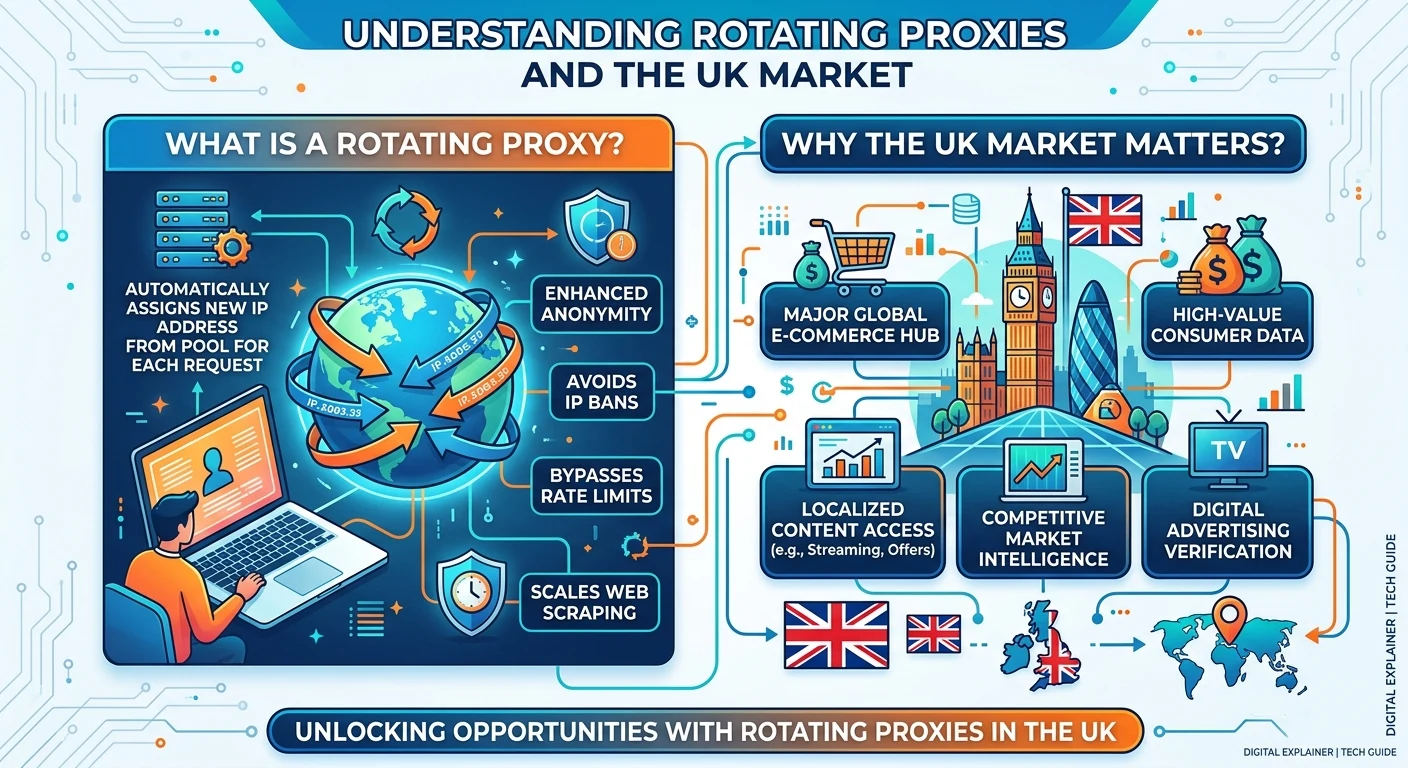
To solve this problem, proxy infrastructure is commonly used to distribute requests across multiple IP addresses.
Using Proxies with Python Requests
import requests

proxies = {
    "http": "http://username:password@proxy-server:port",
    "https": "http://username:password@proxy-server:port"
}

url = "https://www.glassdoor.com/Reviews/company-reviews.htm"

response = requests.get(url, proxies=proxies, timeout=10)

print(response.status_code)
By routing traffic through different IPs, each request appears to come from a different user, which helps reduce detection risk and improves request stability.
Using Proxies with Playwright
from playwright.sync_api import sync_playwright

proxy = {
    "server": "http://proxy-server:port",
    "username": "user",
    "password": "pass"
}

with sync_playwright() as p:
    browser = p.chromium.launch(proxy=proxy, headless=True)
    page = browser.new_page()

    page.goto("https://www.glassdoor.com/Reviews/company-reviews.htm", timeout=60000)

    print(page.title())

    browser.close()
This setup is widely used in production scraping environments where stability and scale are required.
Why Proxy Infrastructure Is Essential
In modern web scraping systems, proxy infrastructure is not optional. It is a core foundational layer of any scalable and production-grade data collection pipeline. Without it, even well-designed scraping logic quickly becomes unstable when operating against platforms that enforce strict traffic control and bot detection mechanisms.
The primary challenge in large-scale scraping is not data extraction itself, but request distribution and identity management at the network level. Without proxies, all requests originate from a single IP address or a limited set of IPs, which makes traffic patterns highly predictable and easy to detect. This often results in throttling, temporary blocks, or complete access restrictions when request volume increases.
By introducing a proxy layer, scraping systems can distribute traffic across a large and geographically diverse pool of IP addresses. This significantly reduces request concentration and helps simulate natural user behavior across different locations and network environments. As a result, request success rates improve, and long-running scraping tasks become significantly more stable.
Residential proxies are particularly effective in this context because they use real ISP-assigned IP addresses associated with end-user devices. This makes them significantly more trustworthy from a network reputation perspective compared to traditional datacenter proxies, which are more easily identified as automated traffic sources.
Rotating residential proxy systems further enhance scalability by dynamically switching IP addresses during active scraping sessions. This continuous rotation reduces pattern detection risks and allows high-volume scraping workflows to operate more consistently over extended periods without triggering anti-bot defenses.
Proxy Types for Glassdoor Scraping
| Proxy Type | Use Case | Stability | Detection Risk |
|---|---|---|---|
| Datacenter Proxies | Testing & low-risk scraping | High speed | High |
| Static Residential Proxies | Session-based workflows | Stable | Low |
| Rotating Residential Proxies | Large-scale scraping | Balanced | Very low |
| Mobile Proxies | High-security targets | Slow but powerful | Extremely low |
This comparison helps determine which proxy type is best suited for different scraping scenarios.
How ColaProxy Supports Large-Scale Scraping
In production-level scraping systems, proxy infrastructure is considered a foundational dependency rather than an optional enhancement. As scraping workloads scale, system reliability becomes increasingly dependent on the stability, distribution, and quality of the underlying proxy layer.
ColaProxy provides a global residential proxy network designed for high-volume and data-intensive web scraping environments. It enables distributed request routing across multiple geographic regions, helping systems balance traffic load and maintain consistent access patterns when interacting with websites that enforce strict anti-bot protections.
Through support for high concurrency connections and rotating session management, ColaProxy is commonly integrated into large-scale data pipelines used in market research, recruitment analytics, and workforce intelligence systems. These environments often require continuous and reliable access to platforms such as Glassdoor, where request stability and IP reputation management play a critical role in overall data collection success.
Conclusion
Glassdoor scraping in 2026 requires a combination of browser automation, structured data parsing, and reliable proxy infrastructure working together as a unified system rather than isolated tools. While technologies such as Requests and Playwright handle the data extraction and rendering layer, they are not sufficient on their own when operating at scale against modern anti-bot environments.
In production scraping systems, stability is primarily determined by network distribution, IP reputation management, and request orchestration. This is where proxy infrastructure becomes critical, ensuring that scraping workloads can scale consistently without interruptions, blocking, or degradation in success rates.
For any enterprise-level or production-grade scraping system, integrating a stable residential proxy network is no longer an optional enhancement but a foundational architectural requirement for maintaining long-term reliability and scalability.
Frequently Asked Questions
Is Glassdoor scraping legal?
Glassdoor scraping is generally used to collect publicly accessible information. However, users should always review Glassdoor’s Terms of Service and ensure that their data collection activities comply with applicable laws, regulations, and website policies in their jurisdiction.
Can Glassdoor detect web scraping?
Yes. Glassdoor uses multiple anti-bot mechanisms, including rate limiting, IP reputation analysis, browser fingerprinting, session validation, and behavioral monitoring. Automated traffic that exhibits abnormal patterns may be restricted or challenged.
What is the best tool for scraping Glassdoor?
The best tool depends on the complexity of the target pages. For static content, Python Requests and BeautifulSoup may be sufficient. For JavaScript-rendered pages, browser automation frameworks such as Playwright are generally more effective.
Why are proxies important for Glassdoor scraping?
Proxies help distribute requests across multiple IP addresses, reducing the risk of rate limiting, IP blocking, and other anti-bot restrictions. They are a critical component of large-scale and long-running scraping systems.
What is the best proxy type for Glassdoor scraping?
Rotating residential proxies are typically considered the most effective option for Glassdoor scraping because they use real ISP-assigned IP addresses and provide a lower detection risk compared to datacenter proxies.
Can I scrape Glassdoor without proxies?
For small-scale testing or occasional requests, scraping without proxies may work temporarily. However, as request volume increases, the risk of throttling, CAPTCHA challenges, and IP bans rises significantly. For scalable data collection, proxy infrastructure is generally recommended.