
In the rapidly evolving world of data acquisition, one question stands above the rest for businesses and developers: Are residential proxies legal? As we navigate 2026, the intersection of privacy laws, data ethics, and automated technology has become more complex.
The short answer is yes, residential proxies are legal in most democratic jurisdictions, provided they are used for legitimate purposes and sourced ethically. However, the “how” and “where” matter immensely. This guide provides a deep dive into the legalities, technical differences, and best practices to ensure your operations remain compliant.
What Are Residential Proxies?
To understand the legal standing, we must first define the tool. A residential proxy is an intermediary server that provides an IP address assigned by an Internet Service Provider (ISP) to a physical location. Unlike datacenter proxies, these look like genuine home users.
Why Businesses Use Them
- Ad Verification: Checking if ads are displayed correctly without being blocked.
- Market Research: Accessing localized pricing data.
- SEO Monitoring: Tracking search engine rankings from different geographic regions.
10 Critical Facts: Are Residential Proxies Legal?
To help you navigate this space, we have structured the core legal considerations into an easy-to-digest format.
1. The Legality of the Tool vs. The Action
Just like a browser or a VPN, a residential proxy is a neutral tool. Using it to access public data is legal. Using it to launch a DDoS attack, commit credit card fraud, or bypass security for hacking is illegal.
2. Residential Proxy vs VPN: The Legal Distinction
While often compared, they serve different roles.
- VPNs focus on end-to-end encryption for individual privacy.
- Residential Proxies focus on rotating identities for data-driven tasks.
- In most countries, both are legal, but proxies are more strictly governed by “Terms of Service” (ToS) of the target websites.
3. Ethical Sourcing is Non-Negotiable
The biggest legal risk involves how IPs are obtained. “Free” lists often use hijacked devices. For total compliance, you need a provider like Colaproxy, which ensures all IPs are sourced through a transparent peer-to-peer (P2P) network where users give explicit consent.
4. Comparison: Ethical vs. Non-Ethical Providers
| Feature | Ethical Providers (e.g., Colaproxy) | Free/Unvetted Providers |
| User Consent | Fully Documented (Opt-in) | Often obtained via Malware |
| Data Privacy | GDPR/CCPA Compliant | High risk of data leaks |
| IP Reputation | High (Real residential ISPs) | Low (Blacklisted frequently) |
| Legal Safety | Safe for Corporate Use | High risk of litigation |
How to Use Residential Proxies Legally
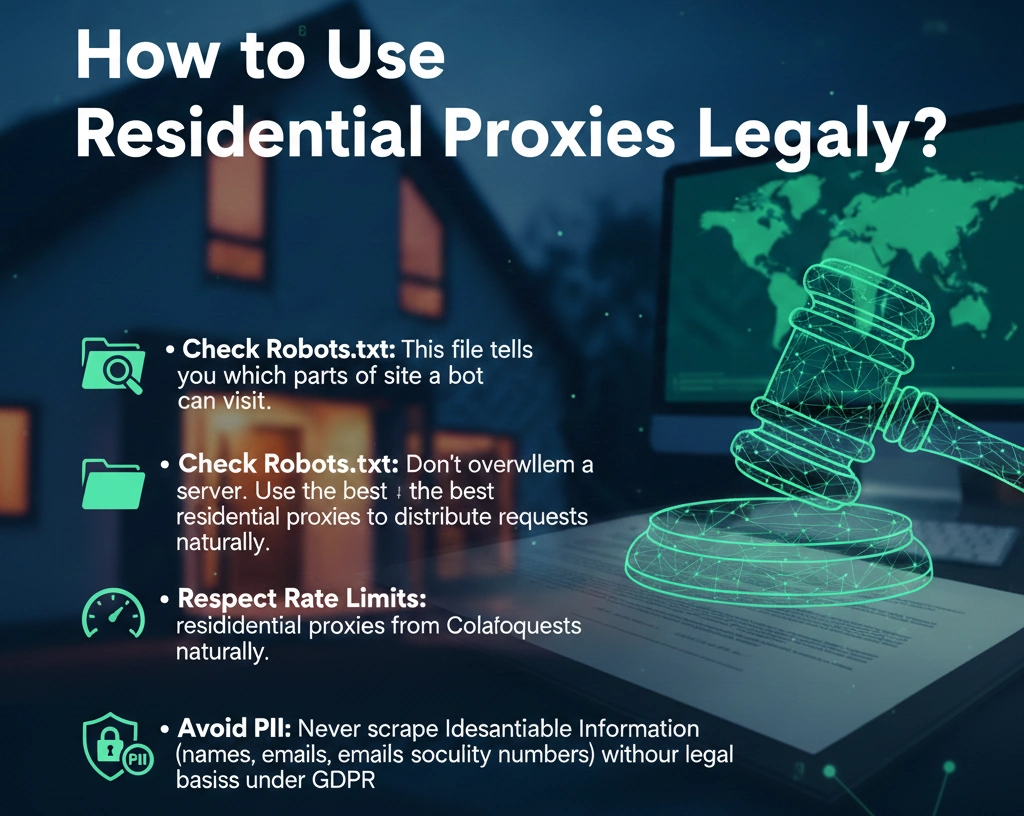
Remaining on the right side of the law involves more than just buying a subscription. You must implement a strategy that respects the digital ecosystem.
- Check Robots.txt: This file tells you which parts of a site a bot can visit.
- Respect Rate Limits: Don’t overwhelm a site’s server. Use the best residential proxies from Colaproxy to distribute requests naturally.
- Avoid PII: Never scrape Personally Identifiable Information (names, emails, social security numbers) without a clear legal basis under GDPR.
FAQ: Common Concerns About Proxy Legality
Are proxies illegal in school or the workplace?
While not “illegal” by federal law, using proxies to bypass school or office firewalls usually violates internal policies. This can result in administrative punishment rather than criminal charges.
Is web scraping legal with proxies?
In the US, the HiQ vs. LinkedIn case established that scraping publicly available data does not violate the CFAA. If the data is behind a login or a paywall, the legal situation changes significantly.
Where can I find the best residential proxies for 2026?
Top-tier providers like Colaproxy offer the balance of speed and legal security required for high-level enterprise work.
Why Colaproxy is the Industry Standard
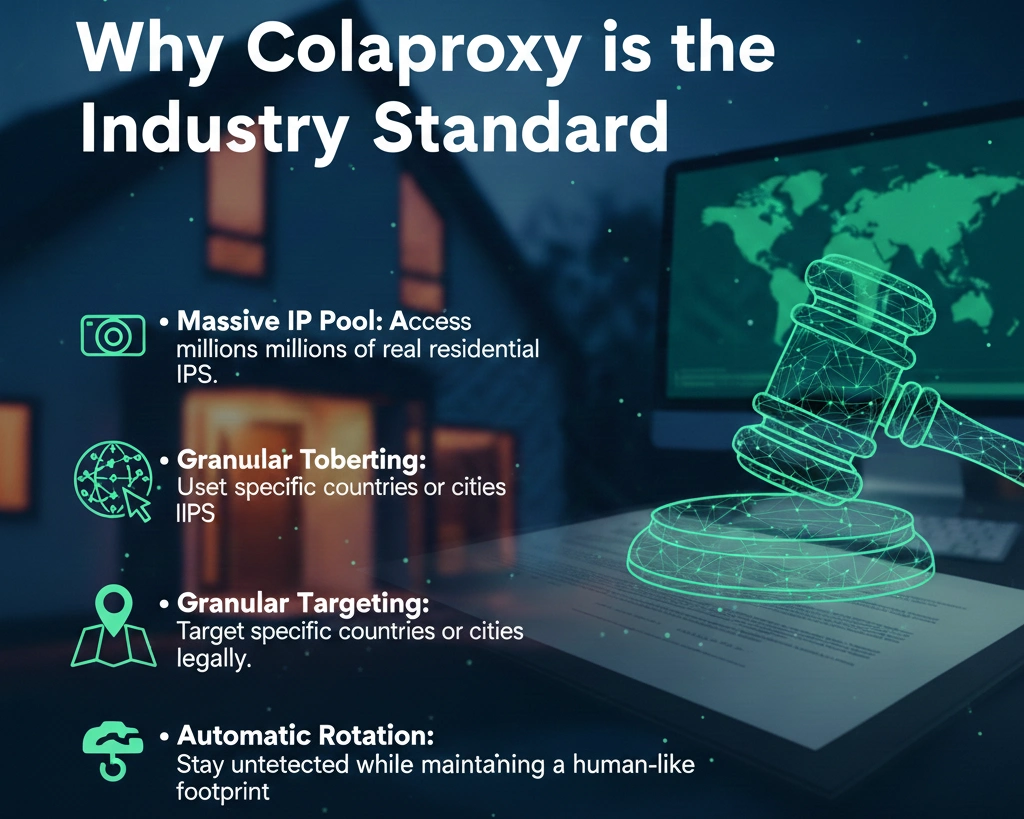
When searching for residential proxy Reddit threads or tech reviews, you’ll find that reliability and ethics are the top priorities. Colaproxy provides:
- Massive IP Pool: Access millions of real residential IPs.
- Granular Targeting: Target specific countries or cities legally.
- Automatic Rotation: Stay undetected while maintaining a human-like footprint.
Final Verdict
Are residential proxies legal? Yes. By choosing an ethical provider and focusing on public data collection, you can leverage the power of residential IPs to grow your business without legal friction.
Ready to scale your data collection safely? Contact us or start a trial with Colaproxy today to experience the best residential proxies in the industry.