When selecting a provider, understanding how different proxy pricing structures align with your technical requirements is essential for cost optimization. The modern market is primarily split into two frameworks: GB-based proxy pricing (bandwidth-based) and IP-based proxy pricing (allocation-based). These proxy billing models do not just impact your monthly invoice; they dictate the efficiency of your data routing and session management.
Table of Contents
What is GB-Based Proxy Pricing? (Pay-Per-Traffic)
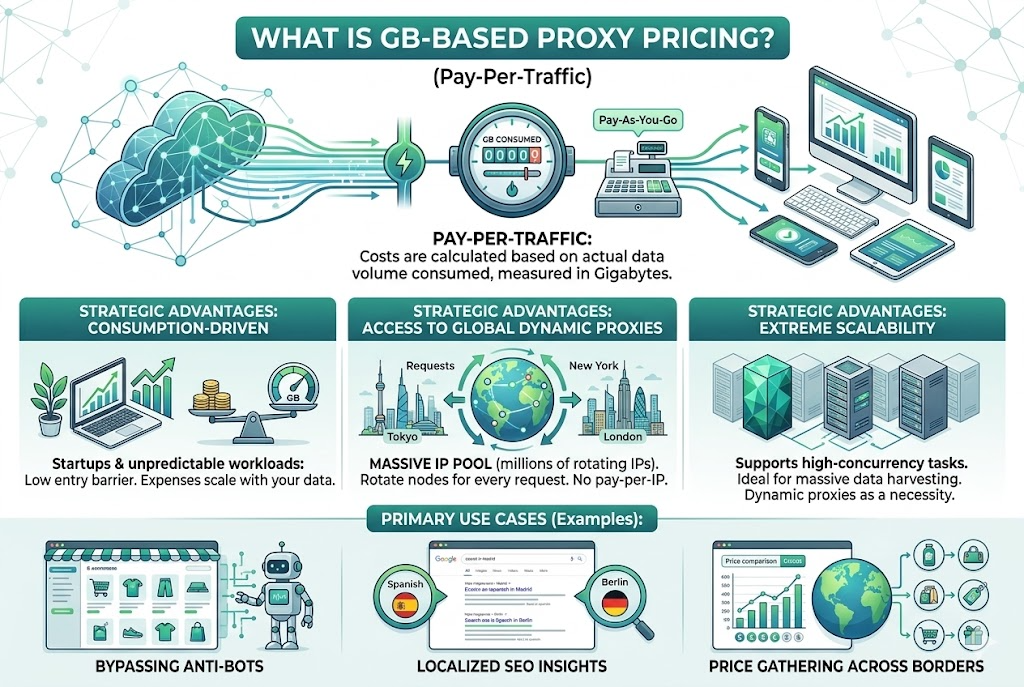
GB-based proxy pricing charges users based on the actual volume of bandwidth consumed, typically measured in Gigabytes. This is currently the most prevalent method for calculating residential proxy cost, offering a “pay-as-you-go” approach that is highly attractive for developers and data firms.
Key Features and Strategic Advantages:
- Consumption-Driven Proxy Pricing: Your expenses scale directly with your data throughput. For startups or projects with unpredictable workloads, this model lowers the entry barrier significantly.
- Access to Global Dynamic Proxies: Users generally gain access to a massive pool of millions of rotating IPs. You can rotate nodes for every request without paying for each individual IP address.
- Extreme Scalability: This model supports high-concurrency tasks, making it the ideal choice for massive data harvesting where dynamic proxies are a technical necessity.
Primary Use Cases:
- Proxy Service for Web Scraping: High-frequency IP rotation is the gold standard for bypassing sophisticated anti-bot systems on e-commerce or social media platforms.
- SERP Tracking: Using localized IPs to monitor search engine results from different regions for accurate SEO insights.
- Market Intelligence: Gathering pricing data across borders where geographic diversity is more important than IP longevity.
What is IP-Based Proxy Pricing? (Flat-Rate/Rental)

Unlike bandwidth-driven models, IP-based proxy pricing focuses on the number of specific IP addresses assigned to your account. This model is built for businesses that prioritize identity consistency and need a predictable proxy billing model.
Key Features and Strategic Advantages:
- Identity Consistency (Persistence): When comparing static vs dynamic proxies, static IPs are the clear winner for maintaining long-term sessions.
- Predictable Proxy Pricing: Costs remain fixed regardless of how much traffic you consume. For high-bandwidth tasks like video streaming or large file transfers, this often results in the cheapest proxy pricing available.
- Dedicated Environments: Private IP options (Dedicated Proxies) ensure your “IP reputation” is yours alone, eliminating the risk of being blacklisted due to another user’s activity.
Primary Use Cases:
- Social Media & Account Management: Managing platforms like Amazon, eBay, or Instagram requires a persistent IP. A sudden IP change can trigger security flags or account bans.
- Ad Verification: Brands use stable IPs to verify their ad placements without triggering “suspicious activity” filters.
- Long-Session Automation: Tasks that require maintaining a “logged-in” state for hours depend on the stability of an assigned IP.
GB-Based vs. IP-Based Proxy Pricing Comparison
| Dimension | GB-Based Pricing | IP-Based Pricing |
| Billing Unit | Traffic (GB) | IP Quantity (per IP) |
| Resource Focus | IP Breadth & Diversity | IP Stability & Exclusivity |
| Rotation Frequency | Very High (Per-request) | Low (Static/Persistent) |
| Cost Predictability | Variable (Usage-dependent) | Fixed (Subscription-based) |
How to Optimize Proxy Costs
To optimize proxy costs, the choice between these models should be driven by your specific workload architecture:
- Choose GB-Based Pricing when: Your target site has strict rate limits; your tasks are bursty or irregular; or you require a vast geographic footprint.
- Choose IP-Based Pricing when: You are managing sensitive accounts; you consume massive amounts of data; or your software tools are sensitive to “IP drifting.”
Summary: Finding the Right Balance
In the competitive landscape of digital infrastructure, top-tier providers like ColaProxy often offer a hybrid approach to proxy billing models.
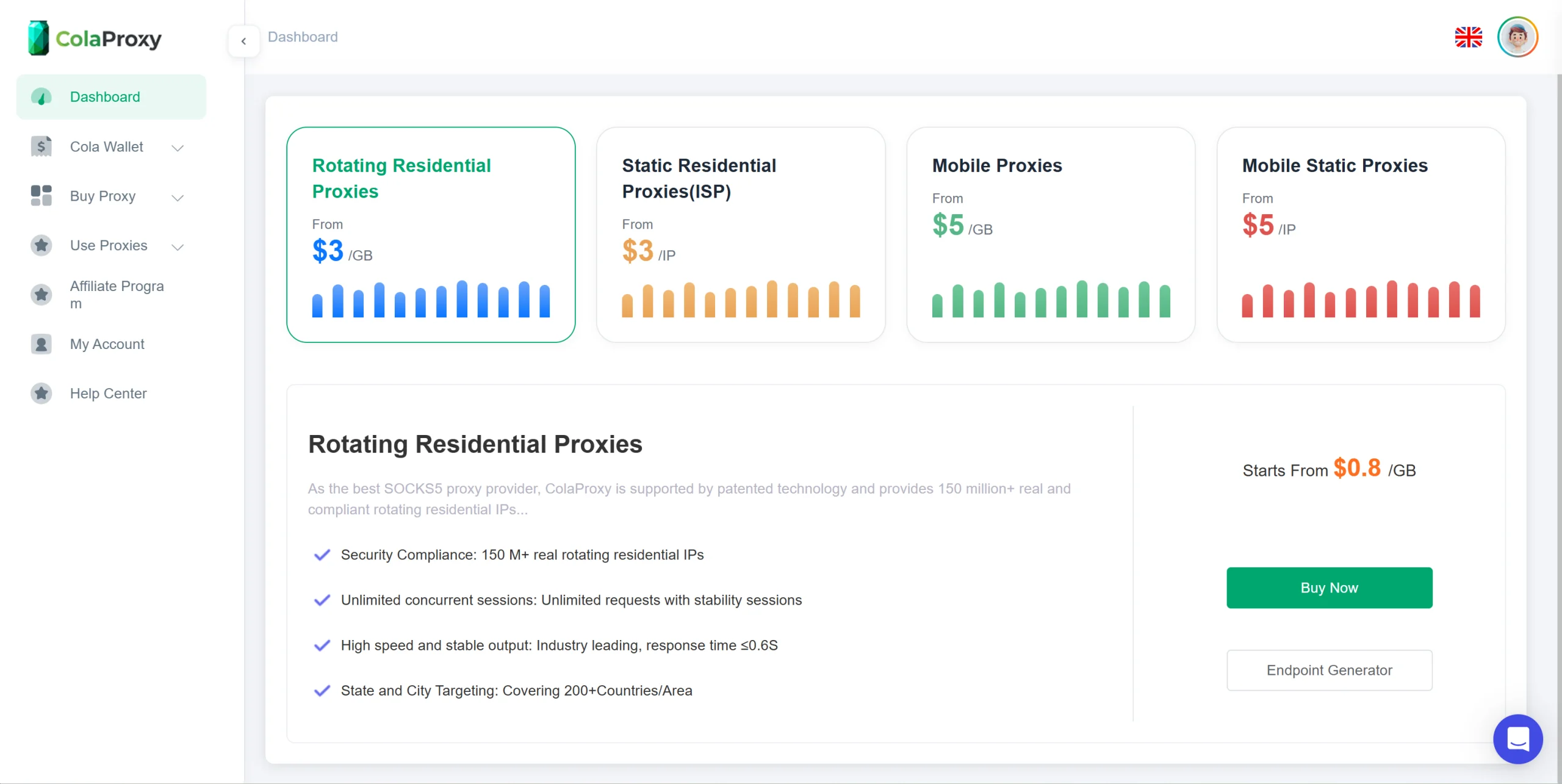
By integrating both GB-based proxy pricing for aggressive data collection and IP-based proxy pricing for account maintenance, organizations can achieve the perfect balance between performance and budget. Selecting the right combination is the most effective way to manage your residential proxy cost while ensuring maximum success rates for your automated workflows.