Cybersecurity audits have evolved dramatically over the past decade. Modern organizations operate across multiple cloud platforms, geographic regions, web applications, APIs, mobile environments, and third-party services. As digital infrastructures become increasingly complex, security teams need better visibility into how their assets appear to users, attackers, and automated systems around the world.
One technology that has become increasingly valuable during security assessments is the rotating proxy network.
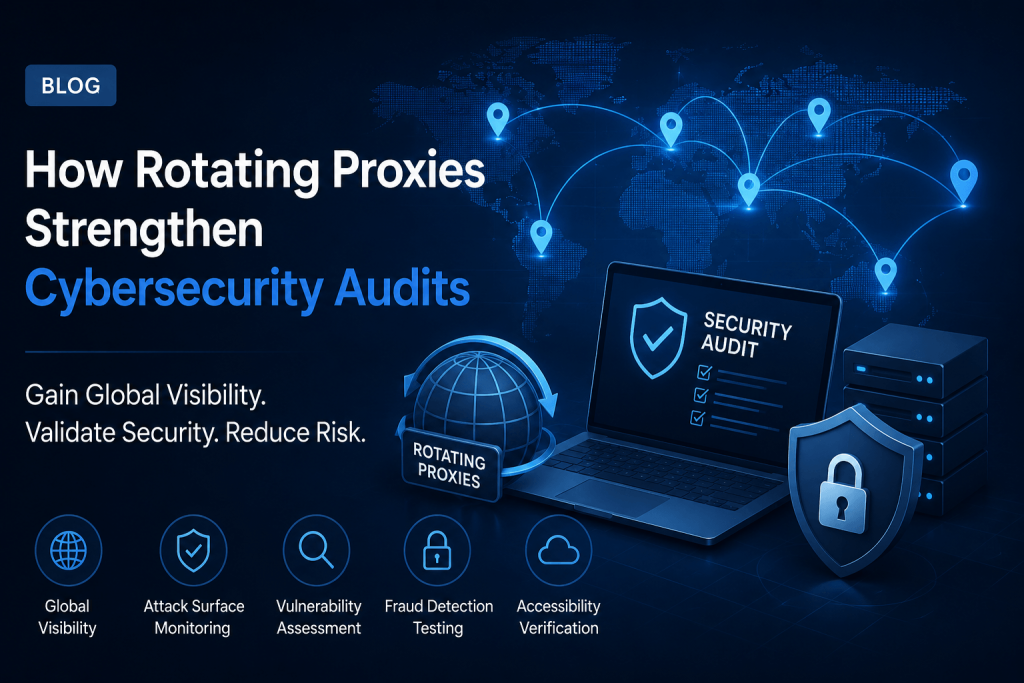
As organizations continue to expand their digital footprints, maintaining visibility across internet-facing assets has become increasingly challenging. According to IBM's Cost of a Data Breach Report, security incidents involving misconfigured cloud services, exposed assets, and unauthorized access continue to be among the most common causes of security breaches. This growing complexity has driven demand for tools that allow security teams to validate systems from multiple locations and network environments.Originally associated with web data collection and online anonymity, rotating proxy networks are now widely utilized in legitimate cybersecurity workflows, including attack surface monitoring, security validation, vulnerability assessment, fraud detection testing, and global accessibility verification.
In this article, we’ll explore how rotating proxies support cybersecurity audits, their advantages over traditional network testing methods, and how organizations can incorporate them into modern security programs.
What Is a Rotating Proxy Network?
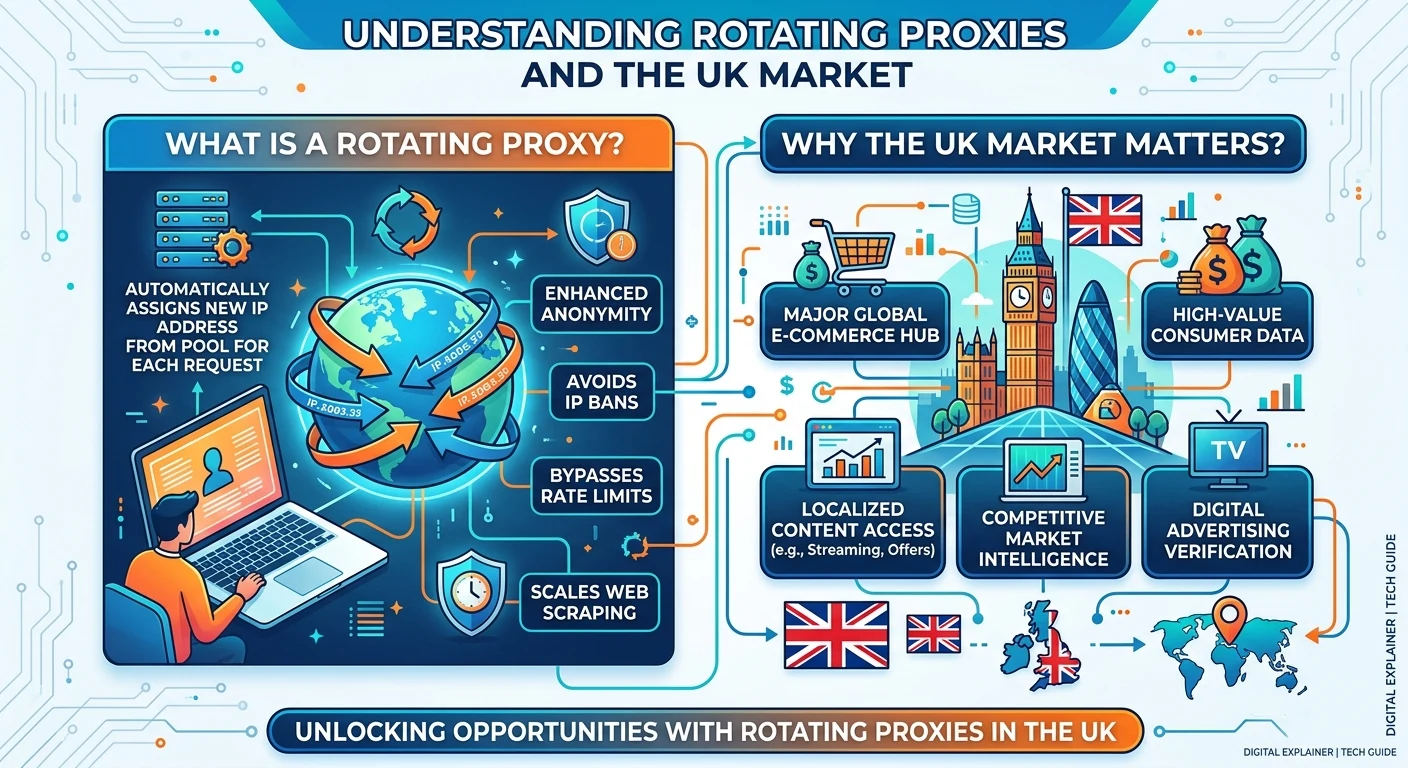
A rotating proxy network is a proxy infrastructure that automatically changes the IP address used for outbound internet requests. Instead of routing all traffic through a single IP address, requests are distributed across a large pool of residential, ISP, or datacenter IPs. This rotation can be configured to occur after each request, at specific time intervals, per user session, or based on geographic and operational requirements.
By continuously assigning different IP addresses, rotating proxy networks help simulate traffic originating from multiple users, locations, and network environments. This makes them particularly valuable for tasks that require broad visibility, large-scale testing, or access from diverse geographic regions.
For cybersecurity professionals, rotating proxies provide a practical way to assess applications, websites, and online services from multiple network perspectives without deploying physical infrastructure in different locations. As a result, organizations can perform more comprehensive security audits, validate region-specific configurations, and gain a more accurate understanding of how their systems appear to users and potential threat actors around the world.
Why Cybersecurity Audits Need Multiple Network Perspectives
Traditional security assessments often originate from a single corporate IP address.
While useful, this approach has limitations.
Many modern systems implement:
- Geo-based filtering
- IP reputation controls
- Rate limiting
- Regional content delivery
- Country-specific authentication policies
- CDN security layers
- Bot mitigation systems
A website may appear secure from one location while exposing different behavior elsewhere.
For example:
| Testing Source | Result |
|---|---|
| Corporate Office IP | Login Protected |
| Foreign Residential IP | Different Security Policy |
| Mobile Network IP | Alternate Authentication Flow |
| ISP Network | Different CDN Route |
Without testing from diverse network environments, security teams may overlook vulnerabilities or misconfigurations.
Rotating proxy networks help eliminate these blind spots.
Traditional Security Testing vs Rotating Proxy-Based Testing
| Feature | Traditional Testing | Rotating Proxy Testing |
|---|---|---|
| Testing Locations | Single or Limited | Global Coverage |
| Regional Validation | Limited | Comprehensive |
| Real User Perspective | Moderate | High |
| Infrastructure Requirements | High | Low |
| Scalability | Limited | Excellent |
| Visibility into Geo-Specific Configurations | Restricted | Extensive |
This comparison highlights why many security teams are incorporating rotating proxy networks into modern audit workflows. By providing broader visibility and more realistic testing conditions, rotating proxies help organizations uncover issues that may remain undetected during traditional assessments.Key Cybersecurity Audit Use Cases for Rotating Proxies
Rotating proxies have become an important tool for modern cybersecurity audits. By providing access to multiple IP addresses, geographic locations, and network environments, they help security teams assess how systems behave under real-world conditions. From attack surface monitoring to fraud prevention testing, rotating proxy networks support a wide range of security assessment activities.
External Attack Surface Monitoring
Attack surface management has become a critical component of cybersecurity programs as organizations expand their digital presence across websites, APIs, cloud platforms, customer portals, and third-party services. Security teams must continuously identify exposed assets and monitor publicly accessible infrastructure to reduce the risk of unnoticed vulnerabilities.
Rotating proxies help analysts observe internet-facing resources from different locations and network environments. This broader perspective can reveal region-specific services, exposed endpoints, DNS inconsistencies, and shadow IT assets that may not be visible from a single location. As a result, organizations gain a more accurate understanding of what external users and potential attackers can discover about their infrastructure.
Security Validation Across Geographic Regions
Many organizations serve customers across multiple countries and regions, yet security configurations are not always deployed consistently worldwide. Differences in web application firewall policies, rate-limiting rules, content delivery configurations, and regional access controls can create security gaps that are difficult to identify through localized testing.
Rotating residential proxies enable security teams to validate security controls from locations across North America, Europe, Asia-Pacific, South America, the Middle East, and Africa. This allows auditors to verify whether protections are applied consistently and helps identify vulnerabilities or configuration issues that may only affect specific regions.
A common example involves content delivery networks and web application firewalls that apply different security policies across regions. An application may enforce strict rate-limiting rules in North America while using less restrictive settings elsewhere, creating inconsistencies that attackers could potentially exploit.Web Application Security Testing
Modern web applications often adjust their behavior based on factors such as user location, IP reputation, network type, and device characteristics. These variables can influence authentication flows, authorization controls, API accessibility, and security enforcement mechanisms.
Rotating proxies provide a practical way to evaluate how applications respond under different network conditions. Security professionals can assess login protections, account lockout policies, multi-factor authentication workflows, session management processes, role-based access controls, and API security measures. By testing from multiple IP addresses and locations, auditors can identify weaknesses that might otherwise remain hidden during traditional assessments.
Bot Protection Evaluation
Organizations increasingly rely on advanced bot mitigation platforms such as Cloudflare Bot Management, DataDome, Akamai Bot Manager, and Imperva Advanced Bot Protection to defend against automated threats. However, implementing these solutions is only part of the process; organizations must also verify that they function as intended.
Rotating proxies allow security teams to evaluate bot detection effectiveness by simulating traffic from different IP addresses and network environments. This helps auditors analyze challenge-response mechanisms, CAPTCHA enforcement, reputation scoring systems, and traffic classification logic. The insights gained can help organizations fine-tune their defenses and improve protection against automated attacks.
Fraud Prevention Testing
Fraud detection systems often use IP intelligence as part of their risk analysis process. Security teams must ensure that fraud prevention controls can accurately identify suspicious behavior while minimizing false positives that may affect legitimate users.
Rotating proxy networks enable organizations to simulate a variety of user scenarios and evaluate how fraud detection systems respond. By testing different locations, session behaviors, and account activities, auditors can validate whether risk scoring and abuse prevention mechanisms are functioning as expected.
| Scenario | Testing Goal |
|---|---|
| Login from New Country | Risk Trigger Validation |
| Multiple Accounts | Abuse Detection |
| Rapid Session Changes | Fraud Rule Testing |
| High Volume Requests | Rate Limit Verification |
Brand Protection and Threat Intelligence
Cybersecurity teams increasingly monitor phishing campaigns, brand impersonation attempts, malicious advertisements, credential theft operations, and other forms of external threats. Many threat actors selectively display content based on a visitor’s geographic location, making comprehensive investigation more challenging.
Rotating residential proxies provide the geographic flexibility needed to investigate these threats from multiple regions. Analysts can safely view location-specific phishing pages, monitor malicious infrastructure, and collect threat intelligence from around the world. This broader visibility helps organizations detect emerging threats earlier and strengthen their overall security posture.
Benefits of Residential Rotating Proxies for Security Audits
Not all proxy types provide the same level of effectiveness for cybersecurity assessments. Residential rotating proxies offer unique advantages that make them particularly valuable for security audits, attack surface monitoring, and application testing. Because these IPs originate from real internet service providers, they provide a more authentic view of how websites, applications, and security controls behave in real-world environments.
Real-World User Visibility
One of the primary advantages of residential rotating proxies is their ability to replicate the experience of genuine internet users. Many websites and online platforms customize content, security policies, and access controls based on a visitor’s location and network type. By using residential IPs, security auditors can accurately evaluate customer-facing experiences, geo-targeted content, and location-specific security mechanisms. This provides a more realistic perspective than testing exclusively through datacenter networks, which may be treated differently by websites and security systems.
Reduced Testing Bias
Modern applications frequently distinguish between residential and datacenter traffic when applying security controls, bot detection measures, and rate-limiting policies. As a result, testing conducted solely from datacenter IPs may not accurately reflect how real users interact with a service. Residential rotating proxies help minimize this bias by allowing security teams to perform assessments under conditions that more closely resemble normal user activity, leading to more reliable and representative audit results.
Broad Geographic Coverage
Large residential proxy networks provide access to IP addresses across numerous countries, cities, and internet service providers. This extensive geographic coverage enables organizations to assess how applications, websites, and APIs behave in different regions and network environments. Security teams can validate regional configurations, identify location-specific vulnerabilities, and ensure that security controls are implemented consistently across global deployments.
Improved Scalability
Residential rotating proxies also support scalable security testing and monitoring. Instead of deploying physical infrastructure in multiple locations, organizations can leverage automated IP rotation to simulate traffic from diverse regions and user environments. This approach allows security teams to conduct large-scale audits, validate security controls across distributed systems, and expand testing coverage while maintaining operational efficiency.
How Rotating Proxies Support Attack Surface Management
Attack Surface Management (ASM) requires continuous visibility into an organization’s internet-facing assets, including websites, APIs, cloud resources, and external services. As digital environments become increasingly complex, security teams must continuously identify exposed assets, validate security configurations, and monitor infrastructure changes that could introduce new risks. Maintaining an accurate view of the external attack surface is essential for reducing security blind spots.
Rotating proxies enhance ASM by providing multiple network perspectives during asset discovery and monitoring activities. Rather than assessing infrastructure from a single IP address or location, security teams can evaluate accessibility, authentication controls, API endpoints, security headers, and regional configurations from different geographic regions and network environments. This broader visibility helps uncover exposed resources, configuration inconsistencies, and unexpected changes that may not be visible from a single viewpoint. By supporting more comprehensive monitoring and validation efforts, rotating proxy networks help organizations maintain a more accurate understanding of their external attack surface and improve overall security posture.
Best Practices for Using Rotating Proxies in Cybersecurity Audits
To maximize the effectiveness of rotating proxy networks during cybersecurity audits, organizations should adopt a structured and responsible approach. Proper implementation not only improves testing accuracy but also ensures compliance, operational efficiency, and reliable assessment results.
Use Ethical and Authorized Testing
Rotating proxies should only be used within authorized security assessment environments. Whether conducting vulnerability assessments, attack surface monitoring, or security validation exercises, organizations must ensure that all activities comply with applicable laws, platform policies, and internal security guidelines. Maintaining clear authorization and defined testing scopes helps prevent legal risks while supporting responsible cybersecurity practices.
Combine Proxies with Security Automation
Many modern security teams integrate rotating proxies into automated workflows to improve efficiency and coverage. Proxy networks can enhance vulnerability scanning, security validation, threat intelligence collection, and continuous monitoring processes by providing diverse network perspectives. When combined with automation platforms, rotating proxies enable organizations to perform large-scale assessments more effectively while reducing manual effort and operational overhead.
Maintain Geographic Diversity
Testing exclusively from a limited number of locations may fail to uncover region-specific vulnerabilities or configuration inconsistencies. Organizations operating globally should evaluate their applications, websites, and APIs from multiple countries, network providers, and connection types whenever possible. Geographic diversity helps security teams identify differences in access controls, content delivery behavior, authentication mechanisms, and other security-related configurations that may vary between regions.
Monitor IP Reputation and Proxy Quality
The quality of the proxy network directly impacts the accuracy of cybersecurity audits. Using reputable providers with reliable residential IP resources helps ensure stable connectivity, consistent performance, and trustworthy testing results. Low-quality proxy pools may experience connectivity issues, blocked requests, or inaccurate responses, potentially leading to incomplete assessments or misleading security conclusions.
Why Security Professionals Choose ColaProxy
For organizations conducting cybersecurity audits, selecting a reliable proxy infrastructure is essential for obtaining accurate and consistent results. The effectiveness of security testing, attack surface monitoring, and threat intelligence collection often depends on the quality, scale, and stability of the underlying proxy network. A well-established proxy provider can help security teams gain broader visibility while maintaining efficient and uninterrupted assessment workflows.
ColaProxy offers a global rotating residential proxy network designed to support a wide range of professional cybersecurity and data-driven operations. With access to more than 90 million residential IPs distributed across 200+ countries and regions, security professionals can perform assessments from diverse geographic locations and network environments. This extensive coverage enables organizations to evaluate applications, websites, and online services from the perspective of real users around the world.
In addition to its large residential IP pool, ColaProxy provides flexible session management options, including automatic IP rotation and sticky sessions. These features allow security teams to adapt proxy behavior based on specific testing requirements, whether conducting large-scale monitoring activities or maintaining consistent sessions during complex security assessments.
The platform is built to deliver stable connections, fast response times, and reliable performance, making it suitable for continuous security operations. From attack surface monitoring and threat intelligence gathering to security validation, fraud prevention testing, and global application auditing, ColaProxy provides the infrastructure needed to support modern cybersecurity workflows at scale.
The Future of Cybersecurity Auditing
As organizations continue expanding their digital presence, cybersecurity audits will require broader visibility than ever before.
Traditional single-location testing is no longer sufficient for evaluating modern applications that serve users across multiple countries, networks, and platforms.
Rotating proxy networks provide a practical way to observe systems from diverse perspectives, helping security teams identify hidden vulnerabilities, validate security controls, and improve overall cyber resilience.
For businesses seeking a scalable and globally distributed testing environment, residential rotating proxies have become an essential component of the modern cybersecurity toolkit.
With a large global IP pool, flexible rotation options, and extensive geographic coverage, ColaProxy offers the infrastructure needed to support comprehensive cybersecurity audits in 2026 and beyond.
FAQ
Are rotating proxies legal for cybersecurity audits?
Yes, when used for authorized security assessments, vulnerability testing, and legitimate monitoring activities. Organizations should always ensure compliance with applicable laws and internal policies.
Why are residential proxies preferred over datacenter proxies?
Residential proxies provide a more realistic view of how websites and applications behave for actual users, making security testing more accurate.
Can rotating proxies help identify regional security issues?
Yes. They allow auditors to test applications from different countries, cities, and ISPs, helping uncover region-specific vulnerabilities and configuration errors.
What cybersecurity tasks commonly use rotating proxies?
Common use cases include attack surface management, threat intelligence gathering, fraud detection testing, bot protection validation, API security testing, and global application monitoring.
Why choose ColaProxy for cybersecurity audits?
ColaProxy offers 90M+ residential IPs across 200+ countries, flexible rotation controls, city-level targeting, and reliable infrastructure suitable for large-scale security testing and monitoring.