
The sneaker industry has changed dramatically over the past few years. What was once a simple online purchase process has evolved into one of the most competitive forms of digital commerce on the internet. Every major Nike SNKRS release now attracts massive global traffic within seconds, especially for limited-edition collaborations, exclusive launches, and high-resale-value products.
For many sneaker enthusiasts, securing a pair is no longer only about speed or luck. The modern sneaker ecosystem is heavily influenced by automation systems, queue mechanisms, anti-bot technology, browser fingerprinting, and network-level risk analysis. As a result, sneaker copping in 2026 has become deeply connected to infrastructure.
One of the most important parts of that infrastructure is proxy technology.
Without stable proxy systems, users often encounter IP bans, checkout failures, queue restrictions, or repeated CAPTCHA verification during high-demand releases. This is why SNKRS proxies have become one of the most discussed topics in the sneaker automation space.
This article explains how SNKRS proxies work, why Nike aggressively blocks suspicious traffic, and why residential proxy infrastructure has become essential for modern sneaker copping.
What Are SNKRS Proxies?
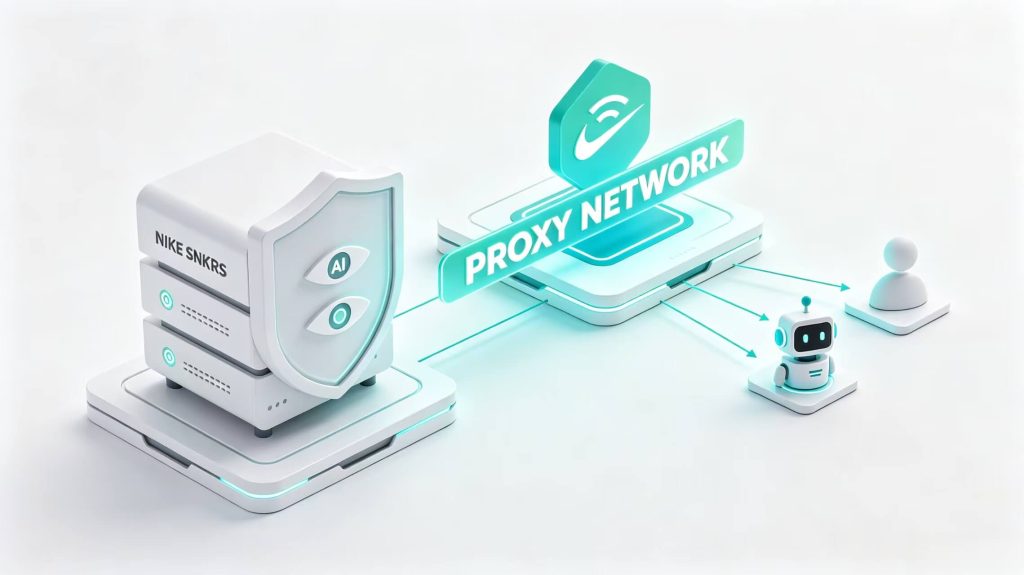
SNKRS proxies are proxy IPs specifically used for accessing Nike SNKRS and related sneaker platforms while masking the user’s original internet connection. Instead of sending all requests through a single IP address, proxy systems distribute traffic across multiple network identities, making requests appear more similar to legitimate consumer activity.
In simple terms, proxies act as an intermediary layer between the user and Nike’s servers. This separation helps reduce the visibility of automation patterns and lowers the likelihood of triggering anti-bot systems.
In today’s sneaker market, proxies are no longer considered optional tools for advanced users. They have become part of the foundational infrastructure behind sneaker automation. Limited sneaker releases now generate enormous amounts of traffic within very short timeframes, forcing platforms like Nike to aggressively monitor network behavior.
Without proxies, repeated requests from a single IP address can quickly appear suspicious. This often leads to queue instability, temporary bans, or failed checkout attempts. By distributing activity across multiple IPs, SNKRS proxies help maintain access stability and improve operational consistency during competitive releases.
Why Nike Has Become Increasingly Difficult to Bot
Nike has invested heavily in anti-bot protection systems over the past several years. The company’s goal is to reduce mass automation, protect checkout fairness, and prevent a small number of users from monopolizing limited inventory.
As sneaker bots became more sophisticated, Nike’s detection systems evolved as well. Modern anti-bot infrastructure no longer focuses only on simple request volume. Instead, it analyzes multiple layers of user behavior simultaneously.
Today, Nike evaluates browser fingerprints, session consistency, device characteristics, request timing, mouse movement patterns, account behavior, geographic alignment, and IP reputation. Even if a user has a fast bot, weak infrastructure can still expose suspicious patterns that lead to restrictions.
When detection systems identify unusual activity, users may experience CAPTCHA loops, payment failures, queue removals, or silent account suppression. In many cases, the platform may not directly notify users that they have been flagged, making troubleshooting even more difficult.
This is why sneaker copping in 2026 is no longer simply about running automation software. Stable infrastructure, realistic browsing behavior, and high-quality proxy networks now play a major role in determining success rates.
Why Proxies Matter for Sneaker Botting
Sneaker bots automate tasks such as monitoring product pages, joining waiting rooms, submitting checkout requests, and managing multiple accounts simultaneously. However, if all automated traffic originates from the same IP address, Nike can quickly recognize abnormal behavior patterns.
This creates one of the biggest problems in sneaker automation. Large numbers of synchronized requests coming from a single network identity immediately increase risk scores within anti-bot systems.
Proxies solve this issue by separating traffic across multiple IP addresses. Instead of appearing as a single user generating massive activity, requests become distributed across different network environments.
This separation is extremely important during major SNKRS releases where millions of users compete for limited inventory within minutes. Even small reductions in detection risk can significantly improve queue stability and checkout reliability.
High-quality proxy infrastructure also helps maintain session continuity. Since many sneaker workflows require persistent login sessions and account consistency, unstable networks can interrupt automation tasks at critical moments.

For serious sneaker users, proxies are no longer simply privacy tools. They have become operational infrastructure that supports scalability, stability, and long-term automation performance.
Residential Proxies vs ISP Proxies for SNKRS
In the sneaker industry, residential proxies and ISP proxies are the two most commonly used proxy types.
Residential proxies route traffic through real household internet connections provided by internet service providers. Because these IPs belong to genuine residential networks, they appear more trustworthy to platforms like Nike.
This makes residential proxies particularly effective for avoiding detection systems. Their traffic patterns look far more similar to normal users compared to traditional datacenter proxies.
Residential proxies are commonly used for account farming, queue entry, region-specific releases, and long-running sneaker sessions. They are especially useful in situations where maintaining a natural browsing profile is critical.
ISP proxies operate differently. They are hosted inside datacenters but registered through ISP networks, combining some of the speed advantages of datacenter infrastructure with the legitimacy of residential IP classification.
Because of their lower latency and stable connections, ISP proxies are often preferred for fast checkout tasks and real-time monitoring.
Many advanced sneaker users combine both proxy types within the same setup. Residential proxies may handle browsing behavior and queue management, while ISP proxies focus on checkout execution.
| Proxy Type | Main Advantage | Common Use Case | Detection Risk |
|---|---|---|---|
| Residential Proxies | Higher IP trust | Queue sessions, account activity | Lower |
| ISP Proxies | Faster speed and stability | Checkout tasks, monitoring | Medium |
| Datacenter Proxies | Low cost and high speed | Mass requests | Higher |
Why Residential Proxy Infrastructure Became Essential in 2026
Modern anti-bot systems increasingly rely on IP trust analysis. Datacenter traffic is now heavily monitored because many automated systems historically depended on commercial hosting providers.
Residential proxies have become significantly more valuable because they blend into ordinary consumer traffic. Their network reputation is generally stronger, making them more difficult for platforms to classify as automation-related traffic.
This improves overall request stability and reduces the frequency of CAPTCHA triggers, session interruptions, and access restrictions.
At scale, residential proxy infrastructure also enables geographic distribution. Different sneaker releases may target specific countries or regions, meaning users often require access to localized network environments.
In addition, modern sneaker setups frequently rely on rotating IP systems to distribute traffic naturally across larger proxy pools. This reduces repetitive behavior patterns and lowers the visibility of automation activity.
As sneaker competition continues increasing, residential proxy quality has become one of the biggest differentiators between successful and failed setups.
How Modern Sneaker Infrastructure Works
Sneaker automation has evolved into a highly infrastructure-driven ecosystem.
A modern setup often combines multiple layers working together simultaneously, including browser automation tools, fingerprint management systems, residential proxy networks, session persistence systems, and monitoring software.
The proxy layer is responsible for handling traffic distribution and reducing network-level detection risks. Above that, browser environments simulate realistic user behavior and maintain isolated browsing identities.
At the same time, sneaker bots continuously monitor product pages, track release status changes, and submit automated checkout requests when inventory becomes available.
This entire process now resembles a distributed automation environment rather than a simple sneaker bot.
The complexity of modern anti-bot systems means that weak infrastructure in any single layer can reduce the effectiveness of the entire setup.
Why ColaProxy Is Suitable for SNKRS Proxies
ColaProxy provides residential proxy infrastructure designed for high-demand automation environments where access stability and IP quality are critical.
For sneaker users, one of the biggest advantages of ColaProxy is its large residential IP pool distributed across multiple countries and regions. This helps reduce IP reuse frequency while improving traffic diversity during major releases.
The platform also supports geographic targeting, allowing users to select network locations that match region-specific sneaker launches.
In competitive sneaker environments where milliseconds matter, network speed and connection consistency also play an important role. Stable residential routing helps maintain smoother queue sessions and more reliable checkout workflows.
Another important factor is IP rotation. Repetitive traffic from the same IP can quickly increase detection risk, especially during high-volume releases. Rotating residential infrastructure helps distribute requests naturally and lowers the likelihood of triggering anti-bot systems.
As modern sneaker copping becomes more infrastructure-focused, reliable residential proxy networks have become one of the most important tools behind long-term operational stability.
The Future of Sneaker Copping
The sneaker industry is continuing to move toward increasingly advanced anti-automation systems.
Machine learning-based detection, behavioral analysis, browser fingerprinting, and traffic modeling are becoming standard components of modern e-commerce security infrastructure.
As a result, successful sneaker copping now depends on much more than simply owning a fast bot.
Users increasingly require high-quality proxy infrastructure, browser isolation systems, session management tools, and scalable automation workflows capable of adapting to evolving platform protections.
This trend is likely to continue throughout the coming years as retailers invest more heavily in anti-bot technology.
For sneaker users, the competitive advantage is gradually shifting away from simple software access and toward overall infrastructure quality.
Conclusion
In 2026, sneaker copping has evolved into a highly technical ecosystem where infrastructure quality plays a major role in determining success.
Nike SNKRS releases now operate under aggressive anti-bot environments designed to detect suspicious traffic patterns, automated behavior, and abnormal network activity. Because of this, proxies have become one of the most important components behind stable sneaker automation.
Residential proxies are especially valuable because they provide stronger IP reputation, improved access stability, and more realistic network behavior compared to traditional datacenter traffic.
As competition continues increasing, scalable proxy infrastructure is becoming essential for maintaining long-term success during limited sneaker releases.
For users looking for reliable residential proxy solutions built for modern automation environments, ColaProxy provides the global coverage, IP quality, and traffic stability required for today’s sneaker ecosystem.