SOCKS5 vs HTTP proxy is a key technical choice in SEO and web scraping strategies today.
In real-world data operations, especially in 2026, everything from search engine optimization to price monitoring depends on how reliably you can access and extract web data at scale.
Modern platforms are no longer simple websites. Search engines, e-commerce systems, and social platforms now use advanced detection models that analyze:
- IP reputation across historical usage
- Behavioral timing patterns
- Device fingerprint consistency
- Geographic alignment
- Session continuity and interaction depth
Because of this, scraping without proper proxy infrastructure often leads to unstable results, blocks, or incomplete datasets.
This is why SEO teams and data engineers rely on proxy networks—especially residential IPs—to simulate real user behavior and maintain stable data access.
Among the available options, HTTP proxies and SOCKS5 proxies are the two most commonly used in production environments.
Understanding the difference between them is essential for building reliable SEO tracking systems, web scraping pipelines, and automation workflows.
How Modern Search Engines Detect Automated Traffic
Before comparing proxy types, it is important to understand why proxies are necessary in the first place.
Modern detection systems no longer rely solely on IP blocking. Instead, they evaluate multi-layer behavioral signals:
- Request frequency patterns (human vs bot-like intervals)
- Mouse movement simulation and interaction depth
- Browser fingerprint entropy
- Cross-session identity consistency
- ASN and IP reputation clustering
As a result, naive scraping attempts often trigger:
- CAPTCHA loops
- Partial SERP data rendering
- IP throttling or soft bans
- Region-based result distortion
To overcome these limitations, distributed proxy architectures are used to introduce identity diversity and request isolation.
What Is an HTTP Proxy?
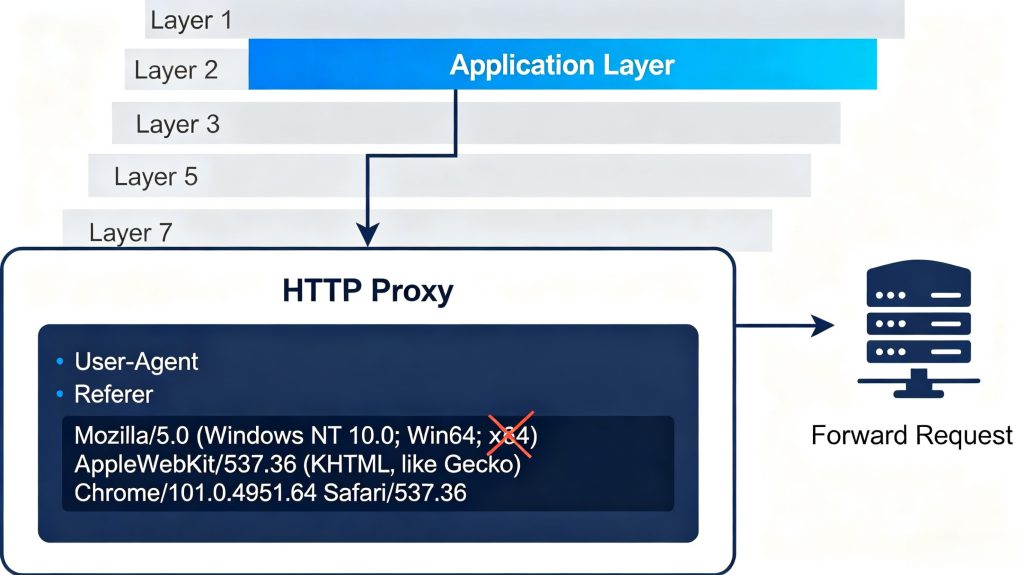
HTTP proxies operate at Layer 7 (Application Layer) of the OSI model. They understand and interpret HTTP/HTTPS traffic directly.
Key Characteristics
- Works specifically with HTTP and HTTPS traffic
- Fully compatible with browsers and SEO tools
- Can cache, filter, and modify requests
- Simple integration with scraping frameworks
- Ideal for structured web data extraction
How HTTP Proxy Works
- Client sends HTTP request
- Proxy interprets request headers
- Request is forwarded to target server
- Response is returned and processed
Because HTTP proxies understand request structure, they are highly effective for search engine scraping and structured SEO data collection.
What Is a SOCKS5 Proxy?
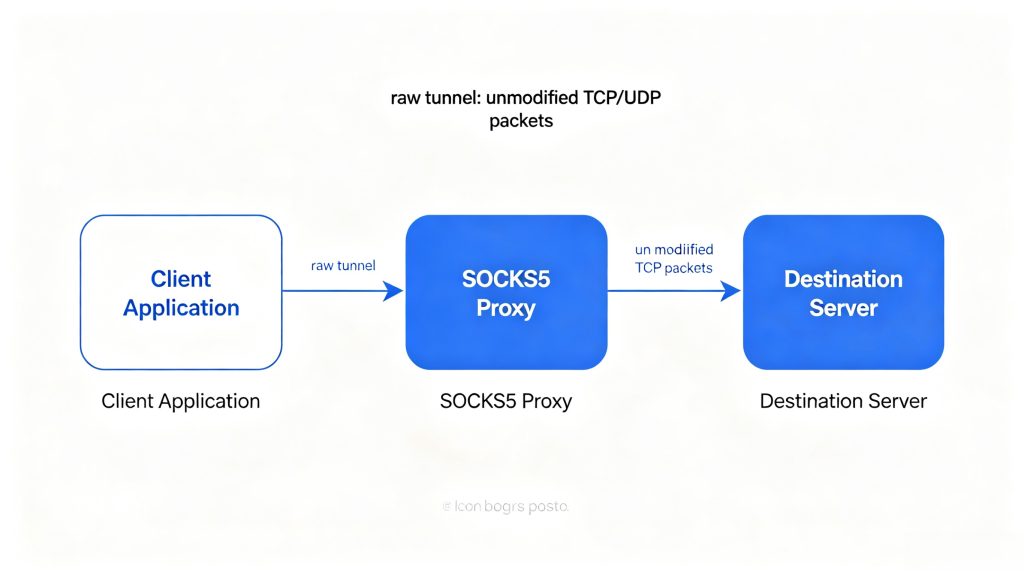
SOCKS5 operates at Layer 4 (Transport Layer) and does not interpret application-level data.
Instead, it forwards raw TCP/UDP packets between client and destination.
Key Characteristics
- Protocol-agnostic (HTTP, HTTPS, APIs, FTP, etc.)
- No data interpretation or modification
- Lower-level network routing
- Highly flexible for automation systems
- Ideal for high-concurrency environments
How SOCKS5 Proxy Works
- Application establishes connection with SOCKS5 proxy
- Proxy creates a raw tunnel
- Data packets are forwarded without modification
- Server responds through the same tunnel
This minimal processing overhead makes SOCKS5 ideal for high-throughput scraping systems and automation pipelines.
SOCKS5 vs HTTP Proxy: Technical Comparison
| Feature | HTTP Proxy | SOCKS5 Proxy |
|---|---|---|
| OSI Layer | Layer 7 | Layer 4 |
| Protocol Support | HTTP/HTTPS only | All protocols |
| Traffic Understanding | Yes | No |
| Performance | Optimized for web requests | Optimized for raw throughput |
| Flexibility | Medium | High |
| Best Use Case | SEO tools, SERP tracking | Automation, scraping pipelines |
| Detection Resistance | Medium | High (with residential IPs) |
Performance Comparison in Real SEO Systems
1. Speed and Latency
HTTP proxies are optimized for web-native traffic, making them ideal for:
- SERP tracking
- Keyword ranking monitoring
- Content indexing validation
SOCKS5 proxies reduce protocol overhead and perform better in:
- Large-scale scraping pipelines
- API-based extraction systems
- Multi-threaded bots
2. Scalability in High-Volume Systems
In enterprise environments handling thousands of requests per minute:
- HTTP proxies may introduce bottlenecks due to protocol parsing
- SOCKS5 proxies handle concurrency more efficiently
This is why large-scale scraping infrastructures often prefer SOCKS5 for backend data pipelines.
SEO Use Cases: Which Proxy Should You Use?
Keyword Rank Tracking
Best choice: HTTP Proxy
- Works directly with SERP tools
- Browser-compatible
- Easy integration with SEO platforms
Competitor Website Scraping
Best choice: SOCKS5 Proxy
- Handles multi-source extraction
- Supports complex automation workflows
- Better for unstructured + structured data
Localized SEO Monitoring
Best approach: Hybrid Model
- HTTP proxies for search engine queries
- SOCKS5 proxies for deep crawling
This hybrid architecture is widely used in enterprise SEO systems.
E-commerce & Price Intelligence
Best choice: SOCKS5 Proxy
- Handles dynamic content loading
- Supports API-based extraction
- Reduces detection risk under high frequency
Why Proxy Quality Matters More Than Proxy Type
By 2026, proxy type alone is no longer the deciding factor in system performance.
The real differentiators are:
- IP reputation quality
- Rotation intelligence
- Geo-distribution accuracy
- Session persistence
- Residential IP authenticity
Low-quality proxies often result in:
- CAPTCHA loops
- Incorrect SERP data
- IP blacklisting
- Session instability
This is why modern teams prioritize infrastructure-grade providers such as ColaProxy, which focus on:
- Large-scale residential IP networks
- High anonymity routing
- Smart IP rotation systems
- Stable long-session connections
- Dual support for HTTP and SOCKS5 protocols
Instead of switching tools, teams can scale within a single ecosystem.
Modern SEO Proxy Stack Architecture
A production-grade SEO scraping system typically includes:
- Request generation layer (keywords, URLs)
- Proxy routing layer (HTTP / SOCKS5 selection)
- Rotation engine (IP switching logic)
- Scraping engine (SERP / HTML extraction)
- Data normalization layer
- Storage and analytics system
In this architecture, proxies act as the identity layer of the entire system, not just a traffic relay mechanism.
Example: SOCKS5 Proxy in Python Scraping Pipeline
import requests

proxies = {
    "http": "socks5h://username:password@proxy-server:port",
    "https": "socks5h://username:password@proxy-server:port"
}

response = requests.get("https://example.com", proxies=proxies)
print(response.text)
This type of setup is commonly used in SEO scraping systems, especially for large-scale SERP extraction and automation workflows.
When Should You Use HTTP vs SOCKS5 Proxy?
Use HTTP Proxy when:
- Running SEO rank tracking tools
- Scraping search engine results pages
- Using browser-based automation systems
- Handling lightweight structured requests
Use SOCKS5 Proxy when:
- Building custom scraping systems
- Handling large-scale data extraction
- Running multi-protocol automation pipelines
- Operating high-performance bots or APIs
Conclusion: Choosing the Right Proxy Strategy in 2026
There is no absolute winner between SOCKS5 and HTTP proxies.
Each serves a different layer of modern data infrastructure:
- HTTP proxies are optimized for structured SEO queries and SERP tracking
- SOCKS5 proxies are optimized for flexible, high-performance automation systems
However, in 2026, the real differentiator is no longer protocol type—it is infrastructure quality and system design.
Modern SEO success depends on:
- IP diversity
- Rotation intelligence
- Session stability
- Global distribution coverage
Platforms such as ColaProxy enable businesses to scale SEO and scraping operations globally by providing stable residential proxy networks with support for both HTTP and SOCKS5 protocols.
Ultimately, competitive advantage in data-driven industries comes not from a single tool, but from building a resilient, scalable proxy architecture capable of adapting to evolving detection systems and global search ecosystems.