Introduction
“IP scrambler” is a term that often appears in discussions about online privacy, yet it rarely reflects how the internet actually works. Many users assume such tools can randomly distort or hide their IP address, making their identity completely untraceable.
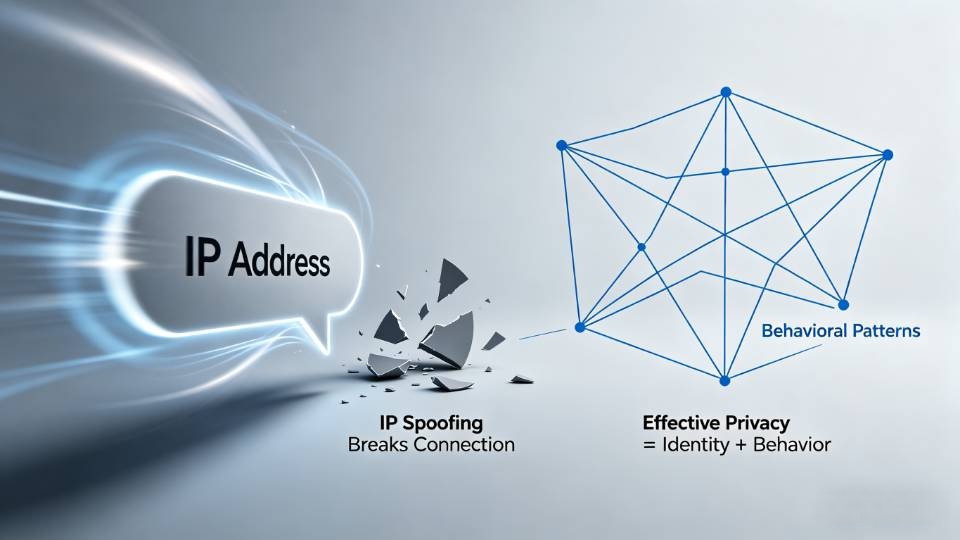
In reality, the concept is more complex. Every device connected to the internet must use a valid IP address to communicate. Without it, data cannot be delivered. This means an IP scrambler cannot exist in the literal sense, because scrambling an IP would break the connection itself.
What users are actually looking for is not this concept, but a way to interact online without exposing their real identity. This is why modern solutions focus on masking, replacing, and rotating IP addresses.
Table of Contents
Why the Idea of IP Scrambler Still Exists
The popularity of this term comes from how people think about privacy. Scrambling suggests randomness and unpredictability, which aligns with the goal of avoiding tracking.
However, modern tracking systems no longer rely only on IP addresses. They analyze behavior patterns such as request frequency, timing, and consistency. Even if such a tool existed, it would not prevent tracking if behavioral patterns remain the same.
In practice, most misconceptions about these tools come down to three key realities. First, an IP address cannot be randomly altered without breaking network communication. Second, modern tracking systems rely more on behavioral patterns than static identifiers. Third, effective privacy depends on separating actions across different identities rather than masking a single IP.
What Happens When You Use Your Real IP
Using your real IP repeatedly creates a consistent identity. Websites can group requests and build behavioral profiles even without login data.
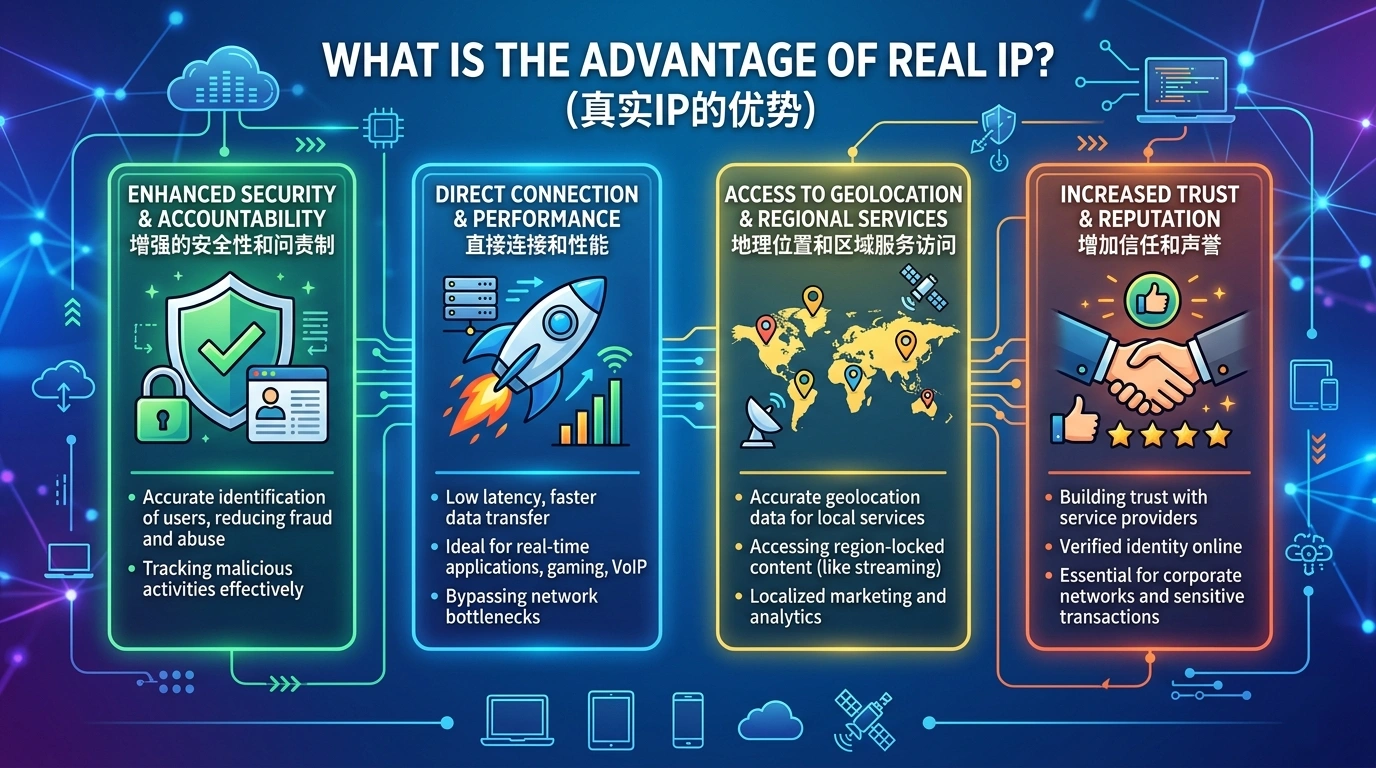
This leads to practical limitations. High-frequency requests from the same IP are flagged quickly, often resulting in rate limits or bans. In multi-account environments, the same IP can link accounts together.
Additionally, your IP reveals information such as location and ISP. While not directly personal, it contributes to a broader tracking profile.
From Concept to Real-World Identity Masking
A common misunderstanding is that anonymity means invisibility. In reality, systems detect abnormal behavior rather than hidden users.
This is why modern strategies focus on blending in. Instead of relying on a single masking method, the goal is to make traffic look like it comes from real users.
When requests appear natural and independent, detection becomes significantly harder. This shift from hiding to blending in is the foundation of modern proxy usage.
Technologies That Replace an IP Scrambler
Several technologies can achieve what users expect from such tools, but each works differently.
VPNs replace your IP through a remote server and are suitable for personal privacy. However, their limited IP pools reduce effectiveness in large-scale operations.
The Tor network offers high anonymity by routing traffic through multiple nodes, but it is slow and unstable for most practical use cases.
Proxy networks provide the most flexible solution. Residential and mobile proxies distribute requests across real IP addresses, making each request appear independent.
In practice, the effectiveness of a proxy network depends on the scale and quality of its IP pool. Large, frequently updated networks perform significantly better. For example, services like ColaProxy offer access to extensive global residential and mobile IP resources, making it easier to simulate real-user traffic in data-heavy environments.
Why IP Rotation Matters More Than an IP Scrambler
If there is a real alternative to an IP scrambler, it is IP rotation.
Instead of using one masked IP, rotation continuously assigns new IPs for each request or session. This breaks the link between actions and prevents pattern detection.
Without rotation, even a hidden IP can be tracked over time. With rotation, each request appears independent.
To achieve this effectively, infrastructure matters. Many basic tools fail under high concurrency. Advanced proxy systems, such as those provided by ColaProxy, are designed to support stable rotation at scale.
Real-World Applications of IP Scrambler Alternatives
In real-world scenarios, IP scrambler alternatives are widely used.
For web scraping, rotating IPs allow continuous data collection without triggering blocks.
For SEO and marketing, different IP locations enable accurate regional analysis.
For account management, separate IP sessions prevent account linking.
These applications show that the goal is not to scramble an IP, but to control how identity appears online.
The Risks of Free IP Scrambler Tools
Many users search for free IP scrambler tools, but these often create more problems than they solve.
Free proxies are usually unstable, slow, and heavily reused. In some cases, they may log user activity or inject malicious content.
Reliable IP masking requires a properly maintained infrastructure. Without it, both performance and privacy suffer.
Conclusion
The concept of an IP scrambler is misleading. While the goal of hiding your IP is valid, scrambling is not how the internet works.
Modern solutions focus on masking, rotation, and identity distribution. Among these, IP rotation is the most effective approach for avoiding detection and maintaining scalability.
As online systems become more advanced, success depends on realism rather than invisibility. The closer your traffic resembles real users, the more effective your strategy will be.
For practical use, testing real proxy environments is the best way to evaluate performance. Many providers offer trial access, allowing you to validate results before scaling.
FAQ
Is an IP scrambler a real tool?
No. An IP scrambler is a simplified term for technologies that mask or rotate IP addresses.
What is the best alternative to an IP scrambler?
Rotating residential proxies are currently the most effective solution.
Can I use free IP scrambler tools safely?
In most cases, no. Free tools often introduce security and performance risks.