Web scraping looks simple on the surface: send a request, parse the response, and store the data. But in practice, most scraping projects fail—not because of bad code, but because of missing steps in the overall process.
Developers often focus too much on extraction logic while ignoring critical components such as request behavior, anti-bot detection, proxy infrastructure, and long-term maintenance. As a result, scrapers that work in testing environments quickly break in production.
This web scraping checklist guide is not just a checklist—it is a structured workflow. Each step explains not only what to do, but also why it matters, so you can build scraping systems that are stable, scalable, and efficient.
Table of Contents
Step 1: Clearly Define Your Data Objectives
Understand what data you actually need and why
Before writing a single line of code, you need a clear understanding of your goal. Are you collecting pricing data for market analysis, gathering search engine results, or extracting user-generated content for AI training?
Each of these use cases requires a different scraping approach. For example, product scraping often involves pagination and structured data, while search engine scraping may require handling aggressive anti-bot systems.
Without a clearly defined objective, it’s easy to overbuild your scraper or collect unnecessary data, which increases both complexity and cost.
Map the structure of your target website
Once you know what data you need, the next step is to understand where that data lives. Inspect the website manually using browser developer tools and identify whether the data is:
- Embedded in static HTML
- Loaded dynamically via JavaScript
- Retrieved through backend APIs
This distinction is critical because it determines whether you should use simple HTTP requests, browser automation, or direct API calls.
Step 2: Choose the Right Scraping Approach
Match your method to the complexity of the website
Not all websites require the same scraping strategy. Choosing the wrong method can either waste resources or fail entirely.
For simple websites, HTTP-based scraping is the most efficient solution because it is fast and lightweight. However, for modern JavaScript-heavy websites, you may need to use browser automation tools to render content properly.
In some cases, the most efficient approach is to bypass the frontend entirely by calling the underlying APIs directly. This requires more analysis upfront but can significantly improve performance.
Select tools that align with your long-term needs
Tool selection should not only solve your current problem but also support future scaling. For example, while a simple script may work for a small dataset, it may not handle concurrency or error recovery when your project grows.
Choosing tools like Playwright for dynamic scraping or building modular code structures early can prevent costly rewrites later.
Step 3: Prepare Realistic Request Behavior
Simulate real users through headers and request patterns
Websites analyze incoming requests to distinguish between humans and bots. One of the easiest ways to get flagged is to send requests with incomplete or repetitive headers.
A robust scraper should include realistic headers such as User-Agent, Accept-Language, and Referer, and rotate them when necessary. This helps your requests blend into normal traffic patterns.
Control request frequency to avoid detection
Sending requests too quickly is one of the most common mistakes in web scraping. Even with proxies, excessive request rates can trigger rate limits or bans.
Instead, implement controlled request intervals and introduce randomness. This makes your scraper behave more like a real user and significantly reduces detection risk.
Step 4: Extract and Structure Data Efficiently
Inspect elements and identify stable selectors
Before extracting data, carefully inspect the DOM structure. Look for stable selectors such as unique class names or data attributes instead of relying on fragile paths that may change frequently.
A well-designed extraction strategy reduces maintenance costs and improves long-term reliability.
Handle pagination, scrolling, and navigation logic
Many websites distribute data across multiple pages or load additional content dynamically as users scroll. Your scraper must account for these behaviors.
Failing to handle pagination properly often results in incomplete datasets, which can undermine the entire purpose of scraping.
Clean and normalize your data
Raw scraped data is rarely ready for use. It may contain duplicates, inconsistent formats, or irrelevant fields.
Implement data cleaning processes such as normalization, deduplication, and validation to ensure your output is usable and reliable.
Step 5: Implement Anti-Detection Strategies
Use proxy rotation to distribute traffic
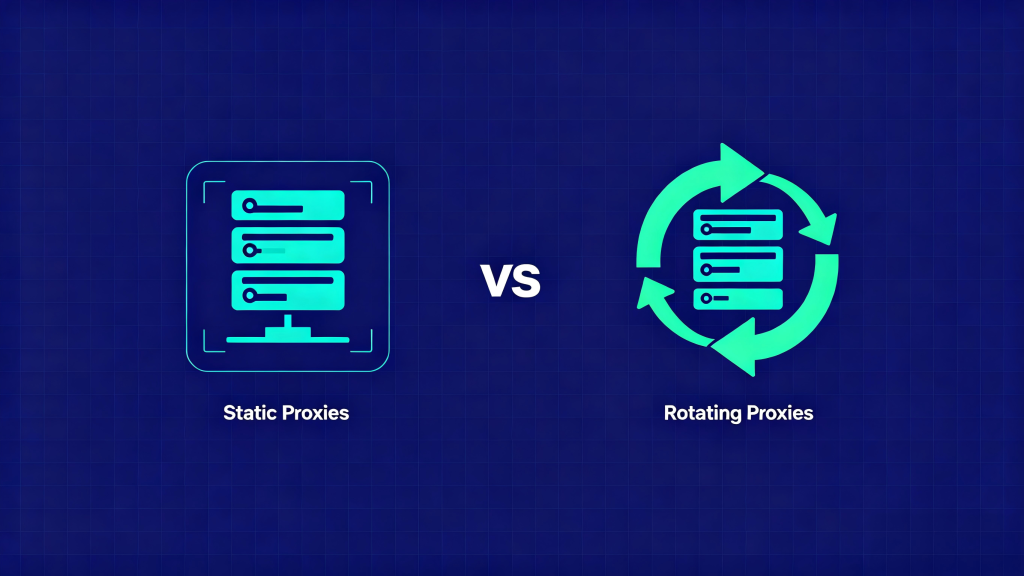
One of the most effective ways to avoid IP bans is to distribute requests across multiple IP addresses. This prevents any single IP from generating suspicious traffic patterns.
Rotating proxies make your scraping activity appear as if it comes from many different users, which significantly improves success rates.
Choose proxy types based on your target difficulty
Different proxy types serve different purposes:
- Datacenter proxies offer speed and cost efficiency
- Residential proxies provide better anonymity and success rates
- Mobile proxies deliver the highest trust level for strict platforms
Using the wrong type can lead to unnecessary failures, even if your scraper is otherwise well-designed.
Maintain sessions and handle cookies correctly
Many websites rely on session tracking to detect unusual behavior. If your scraper does not maintain consistent sessions, it may trigger security mechanisms.
Proper cookie handling is especially important for logged-in environments or personalized content.
Step 6: Build Robust Error Handling
Detect blocking signals early and respond accordingly
A professional scraper should not blindly continue when blocked. Instead, it should detect signals such as HTTP errors, CAPTCHA pages, or abnormal responses.
Once detected, your system should automatically adjust—by switching proxies, slowing down requests, or retrying with different parameters.
Implement retry logic and fallback strategies
Failures are inevitable in web scraping. The difference between a fragile script and a reliable system is how it handles those failures.
Retry mechanisms, combined with proxy rotation and intelligent backoff strategies, can dramatically improve overall success rates.
Log and monitor scraper performance
Logging is often overlooked but is essential for debugging and optimization. By tracking requests, responses, and errors, you can identify bottlenecks and continuously improve your system.
Step 7: Design for Scalability
Plan for growth from the beginning
Many scraping projects start small but quickly expand. Without proper planning, scaling can lead to performance issues and instability.
Design your system with modular components so it can handle increased workloads without major redesigns.
Use queues and distributed systems for large workloads
At scale, you need structured systems to manage tasks efficiently. This includes:
- Request queues
- Distributed workers
- Proxy management layers
These components allow your scraper to process large volumes of data reliably.
Consider outsourcing complexity with scraping APIs
For highly complex or protected targets, managing everything internally may not be efficient. Scraping APIs can handle proxy rotation, retries, and rendering automatically.
This allows you to focus on data extraction rather than infrastructure.
Step 8: Store, Maintain, and Update Data
Choose storage solutions based on scale
For small projects, simple formats like JSON or CSV may be sufficient. For larger systems, databases are necessary to handle volume and enable querying.
Keep your data fresh and relevant
Web scraping is not a one-time process. Data changes over time, and your system should include mechanisms for regular updates.
Adapt to website changes over time
Websites frequently update their structure, which can break scrapers. Regular monitoring and maintenance are required to keep your system functional.
Step 9: Follow Responsible Scraping Practices
Respect website limitations and policies
Always check a website’s terms of service and robots.txt file. Responsible scraping reduces the risk of legal issues and helps maintain access.
Avoid overloading target servers
Excessive requests can harm website performance and lead to stricter blocking. Ethical scraping practices benefit both you and the target platform.
Final Checklist Summary
Before deploying your scraper, ensure that:
- Your data goals are clearly defined
- Your scraping method matches the website structure
- Your requests mimic real user behavior
- You are using proxy rotation effectively
- Anti-detection strategies are in place
- Error handling and logging are implemented
- Your system is scalable and maintainable
FAQ: Web Scraping Checklist Best Practices
What is the safest way to scrape a website?
The safest approach is to combine low request frequency, proxy rotation, and realistic request behavior. Mimicking human interaction patterns is key to avoiding detection.
Do I always need proxies for web scraping?
For small-scale tasks, proxies may not be necessary. However, for any repeated or large-scale scraping, proxies are essential to prevent IP bans and maintain stability.
What is the biggest mistake in web scraping?
The most common mistake is focusing only on data extraction while ignoring anti-detection, scaling, and infrastructure. A successful scraper is a system, not just a script.
Conclusion
Web scraping success is not determined by how quickly you can write code, but by how well you design your system.
By following this checklist, you can move from fragile scripts to reliable data pipelines that perform consistently at scale.
If you’re planning to scale your scraping workflows, combining a solid scraping architecture with reliable proxy infrastructure can significantly improve performance and reduce operational risks.