
Short Answer
The digital landscape is no longer a level playing field. Whether you are an e-commerce giant monitoring competitor pricing or a social media manager handling multiple accounts, the “walls” of the internet—geo-blocks, IP bans, and sophisticated bot detection—are constantly closing in. This brings us to a pivotal question: Can you use residential proxies anywhere? The short answer is yes.
Residential proxies can generally be used anywhere in the world to access localized content, bypass geo-restrictions, and scrape data with high anonymity. Because these proxies route your traffic through real residential devices with IP addresses assigned by Internet Service Providers (ISPs), they allow you to appear as a genuine local user in over 190 countries. In this guide, we conclude that while residential proxies offer unparalleled global flexibility, success lies in choosing a high-quality provider like Colaproxy that balances massive IP diversity with elite-level security.
What Exactly Are Residential Proxies?
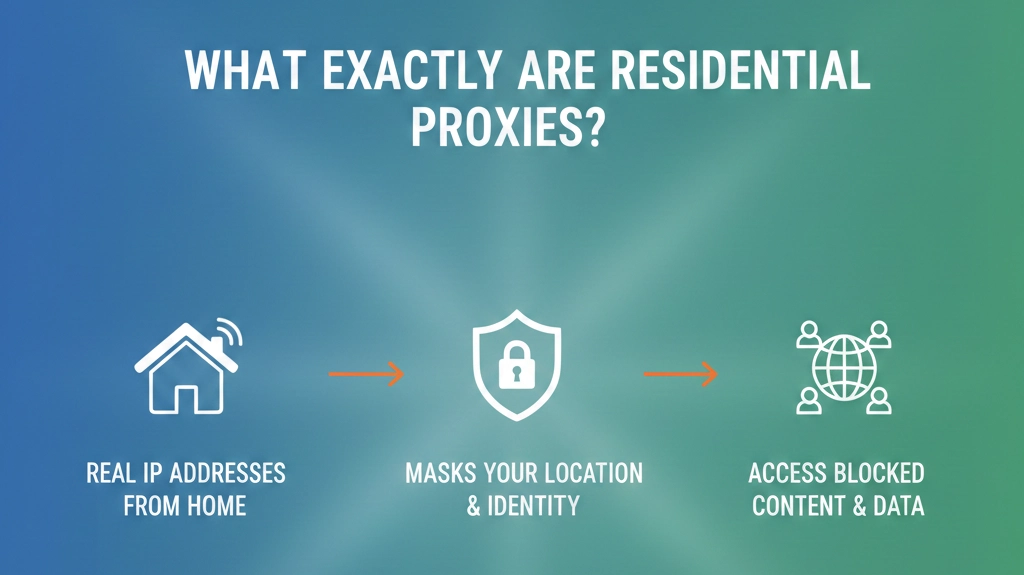
Before diving into the “where,” we must understand the “what.” Unlike datacenter proxies, which are created in bulk on servers, a residential proxy is an intermediary that uses an IP address assigned by an ISP to a physical homeowner.
When you use a residential proxy, your internet request is routed through a real home Wi-Fi network. To the target website, you don’t look like a script running in a cold server room; you look like a person sitting in a living room in London, Tokyo, or New York. This makes them the and data extraction.
How Colaproxy Powers Global Connectivity
Residential proxies function through a vast network of peer-to-peer (P2P) nodes. Providers like Colaproxy maintain ethically sourced pools where users share idle bandwidth. This creates a global mesh of IPs that cover almost every corner of the map.
Can You Use Residential Proxies Anywhere for Business?
The geographical flexibility of residential proxies is their greatest strength. Because humans live everywhere, residential IPs exist everywhere. Here are the primary ways global access changes the game:
1. Bypassing Geo-Restrictions
If you are in Singapore but need to see how your ad campaign looks to a user in Los Angeles, a residential proxy is your only reliable ticket. Standard VPNs are often flagged by streaming services, but residential IPs blend in perfectly.
2. Hyper-Local Targeting (City and ISP Level)
Advanced providers allow you to drill down beyond just “Country.” With Colaproxy, you can select specific cities or even specific mobile carriers (ASN targeting). This is crucial for:
- Local SEO Tracking: Seeing search results exactly as a local would.
- Price Intelligence: Detecting if a retailer shows different prices to users in high-income zip codes.
3. Global Web Scraping
Web scraping is a game of cat and mouse. If you use rotating residential proxies, you can change your IP address with every request, spreading your footprint across thousands of different “homes” worldwide to avoid bans.
Are Residential Proxies Illegal?
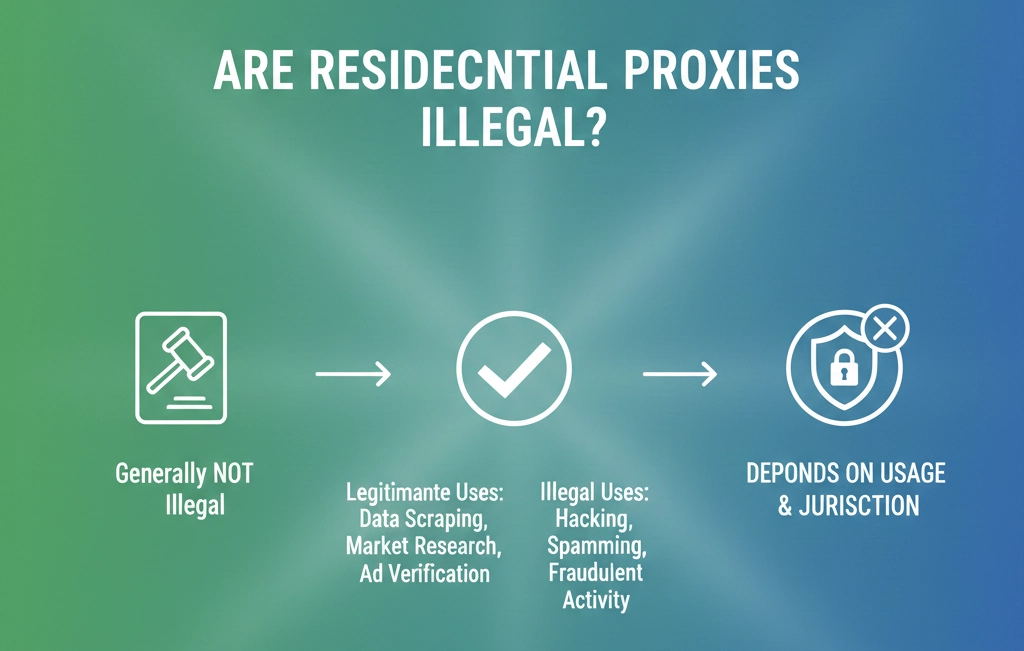
A common concern for businesses is the legal landscape. Are residential proxies illegal?
The straightforward answer is: No, residential proxies are not illegal to own or use for legitimate business purposes. However, legality is determined by how you use them.
The Colaproxy Standard: We prioritize ethical sourcing. Our IPs are obtained through transparent means, ensuring that our clients respect international data privacy laws like GDPR. When you ask, “Are residential proxies illegal?”, the answer is “Not when you use a reputable provider.”
How Are Residential Proxies Detected?
If they are so effective, how are residential proxies detected by some websites? Advanced platforms use “Proxy Detection Engines” to flag suspicious traffic. They look for:
- IP Reputation: If an IP has been used for spamming, it gets blacklisted.
- DNS Leaks: If your IP says you are in France, but your DNS says Chicago, you’ll be flagged.
- Behavioral Analysis: If you click 50 links per second, the site knows you are a bot regardless of your IP.
Why Colaproxy Wins: We provide “clean” IPs with low detection rates. By offering rotating residential proxies, we ensure you never stay on one IP long enough to trigger behavioral alarms.
FAQ: Using Residential Proxies Anywhere
Can I use residential proxies on my phone?
Yes. Most residential proxies work via standard HTTP/S or SOCKS5 protocols. You can easily configure them in your mobile browser or via specialized apps.
Do residential proxies expire?
It depends. Rotating proxies change automatically. Static residential proxies (ISP proxies) allow you to keep the same IP for longer durations.
Why choose Colaproxy over free lists?
“Free” proxy lists are often “honeypots” set up to steal your data. Colaproxy offers a secure, encrypted tunnel and a massive pool of verified IPs.
Conclusion: The World is Your Oyster
So, can you use residential proxies anywhere? Absolutely. Whether you’re breaking through geo-blocks, scraping localized pricing, or managing a global social media empire, residential proxies provide the legitimacy you need.
By choosing Colaproxy, you aren’t just getting an IP address; you’re getting a passport to the global web.
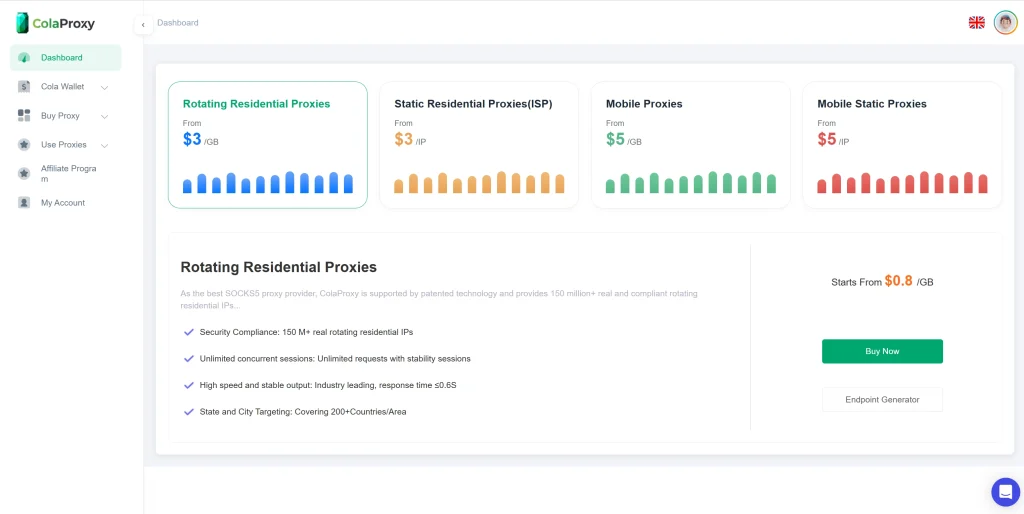
Ready to scale? Explore our Residential Proxy Plans and start your global journey today.